I wrapped my arrival lei—beautiful purple and white hibiscus flowers—around my wrist and walked down to the beach. I couldn’t tell whether the tide was going in or out; regardless of the timing I knew I needed to do this. I was flying back from Hawaii the next morning.
I got as close to the surf as I could, and tossed the lei into the water for my Mom. She isn’t dead, but there have been so many losses in the past few years: loss of control, of autonomy, of health, of mobility, of a spouse of 50+ years. Her life caving in under her, just like the wet sand subsiding under my feet. The surf roiled and rolled, pulling the lei under and tossing it up again, over and over, just like my feelings have churned and bubbled and cycled over the course of her recent life transitions.
A couple of times the surf pushed the lei back on the shore, and I was afraid it wouldn’t go out to sea at all. Had I mistimed the tide? Had I not tossed it out far enough? I asked myself, am I “doing grief” right? Of course I am. There’s no wrong way to do it.
Finally it looked like some deeper waves were going to pull the lei back out to sea after all. It occurred to me I should check the shoreline on my walk back. Then I decided not to. Part of the point of this ritual is to let it go.
About a week prior, the first cemetery I visited on Kauai was the Hanapepe Japanese Cemetery. I climbed a flight of concrete steps. Passing carved granite and small enclosures on the way up, I arrived at what looked like a lava field. (Which I suppose it was.)
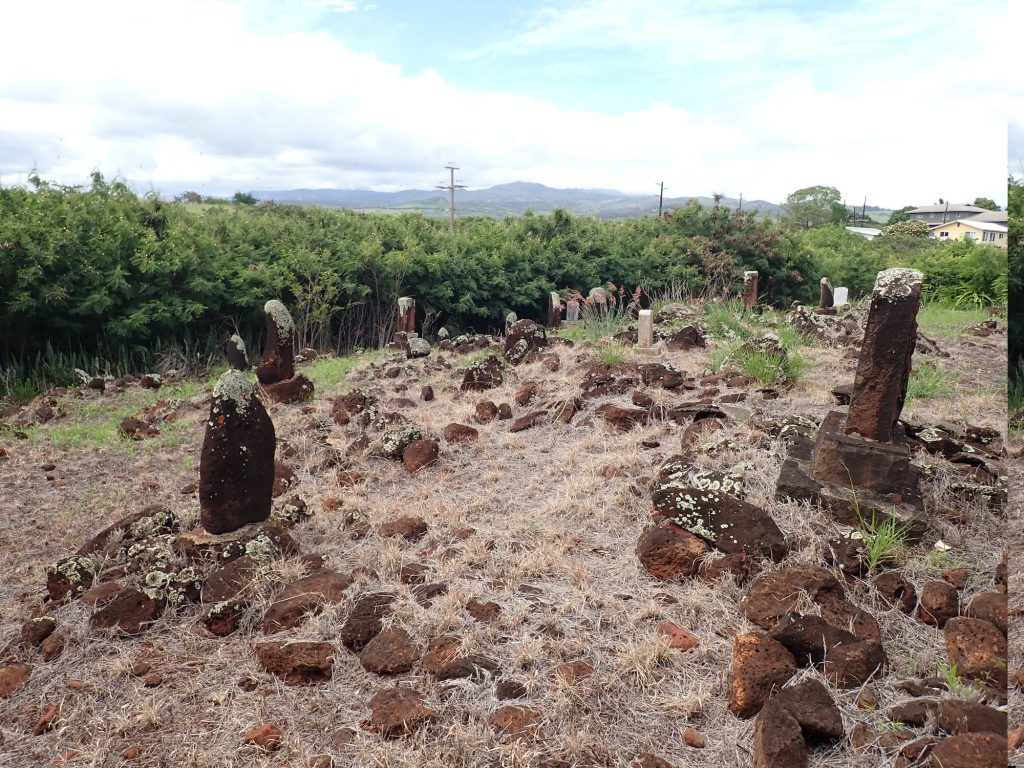
Many graves were marked by a frame of volcanic rocks which seemed too small to indicate the size of a human body. Many of the headstones were simple, uncarved volcanic rocks and monoliths. Some rough-hewn, some not. Some marked, many unmarked. If you want to indicate a grave using available natural materials, this is the way to do it.
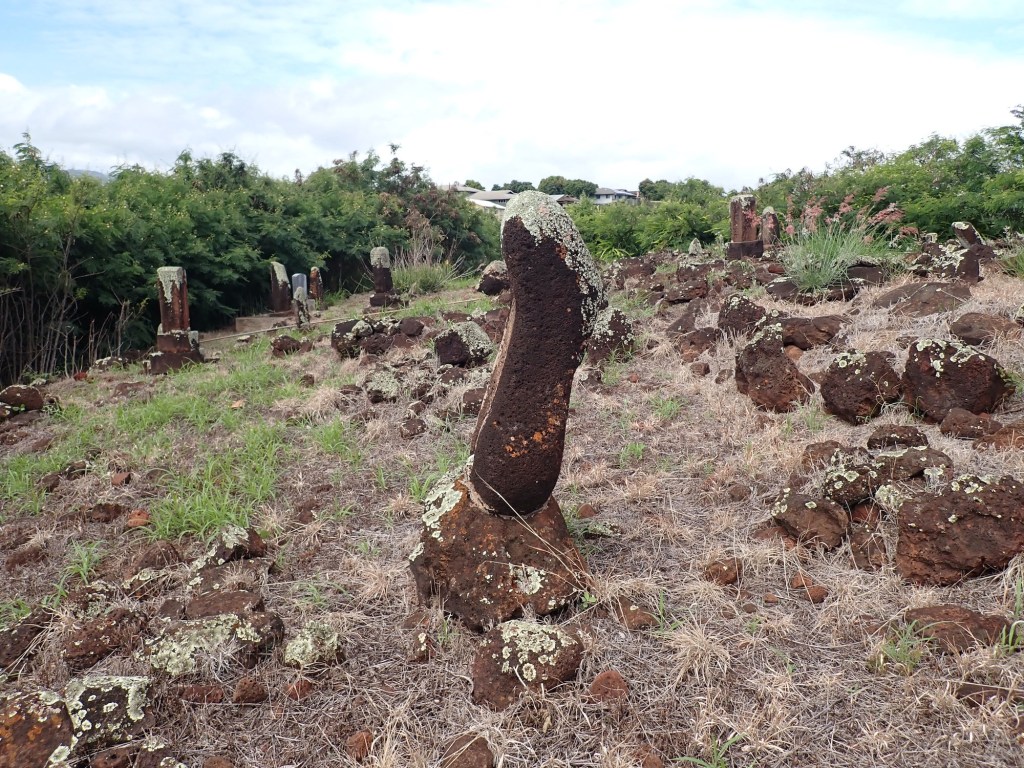
The jungle was encroaching on the perimeter of course, and I couldn’t help but wonder how many more markers were hiding under branches, flowers, plants and scrub.
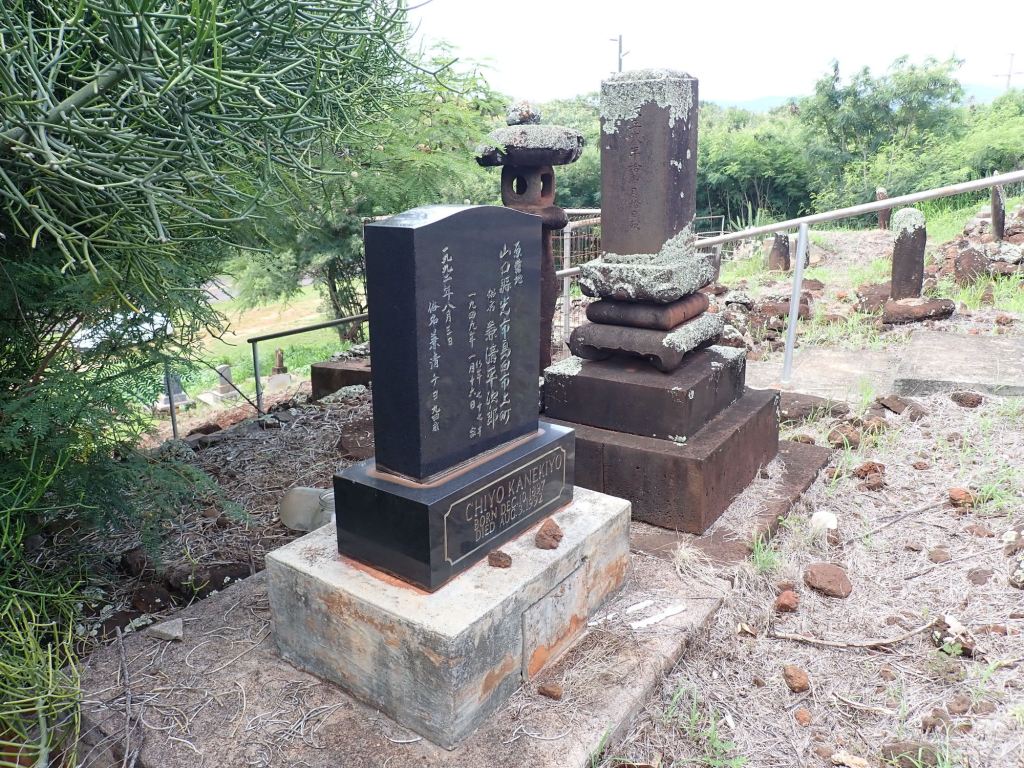
Here are a couple of my favorites,

Carved from volcanic rock, this marker will eventually decompose from weather and lichen.
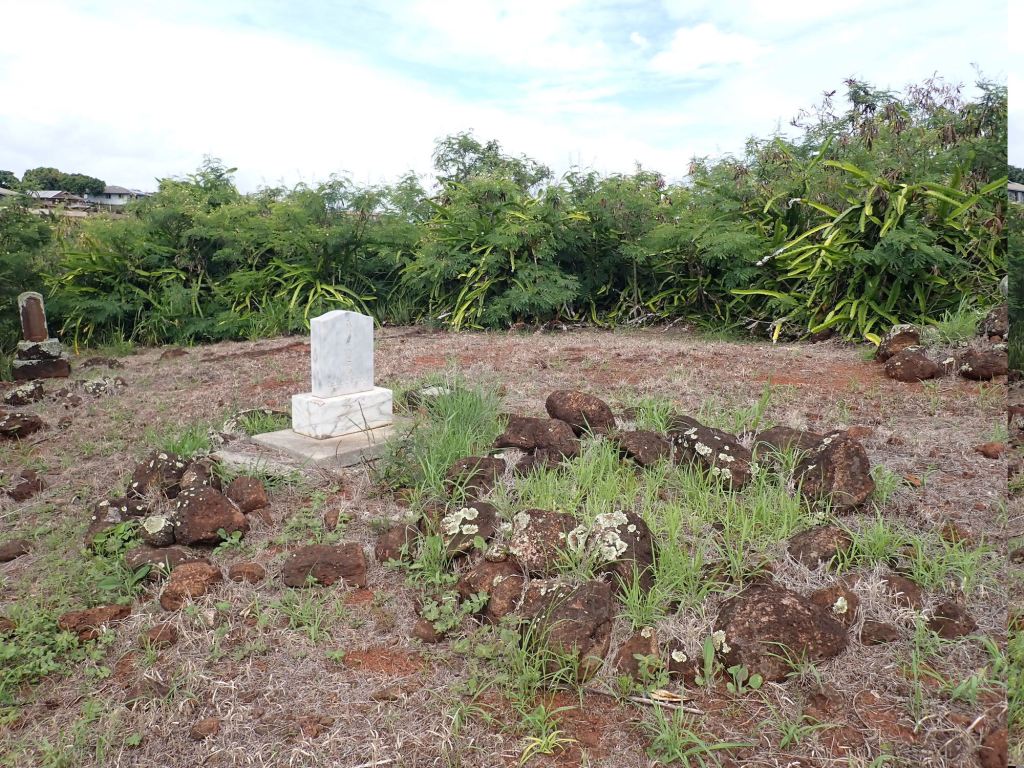
This white granite stands out like a sore thumb, but creates an interesting combination of traditions and appearance.
This beautiful cemetery made me think that perhaps it’s not so important after all for me to have a “permanent” marker memorializing my time on earth. Perhaps it is the Way of the rocks and the petals and everything else to become one with the earth or the water again. Perhaps it is simply the Way, and perhaps I should follow the path of least resistance.
I learned later that while there isn’t a right way to do grief, there’s a better way to send a lei out to sea: remove the petals from the string first. Just send the flowers into the water, not the string. Now I know better, so I’ll do better next time. Grief might not get easier, but I can get better at coping with it.
Stump and Lamb explores personal growth and meaning via travels to pioneer cemeteries of the West.
This post was originally published at michellerau.com.
 michelle rau