When an injury happens, I want support NOW. That’s worth the cost of storage.
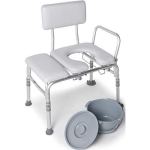
That shower bench was a pain in the butt (pun intended). I had to move it every time I got into Mom’s storage unit. The suction cup feet stuck to the smooth concrete floor and the catch basin never sat right on the rails. Sure, I could sit on it or pee in it, but the hassle still outweighed the usefulness.
It took me far too long to donate the shower bench. I think I know why.
Reason 1: Shit happens.
As I age, having a few pieces of mobility equipment around mitigates risk. It’s cheap insurance against not being able to get around, and mobility is very important.
About a year before Mom’s move to assisted living, I broke my left ankle. At least three pieces of leftover equipment got me through:
- My old crutches from a 1994 (yes, 1994) motorcycling accident, which got me from the garage into the house that day
- A potty chair from the neighborhood free box, which allowed me to pee at night without making a painful and hazardous trek to the bathroom
- A friend’s rollator from her back injury. I wheeled myself all over the house in that thing.
I also acquired,
- A folding cane
- A “shower chair” made from two plastic milk crates zip-tied together and topped with a kid’s foam swim board
- Ankle braces to fit various shoe / activity needs
- A blue metal rollator from the neighborhood free box which I used as an “outdoor rollator” to take walks so I could keep my friend’s “indoor rollator” clean. (This item was so useful my boyfriend and I took the trouble to replace the bearings in all four wheels.)

If an accident or injury happens, I don’t want to screw around. When I need a support, I need it RIGHT NOW and I don’t want to wait around for it to get delivered. For me, that convenience outweighs the storage space used. (For my brother, it was different. He struggled to find a place to keep Mom’s wheelchair. “You’ll need it someday,” I warned him. It took a year, but now she is using it.)
Having leftover equipment around came in handy when I sprained the other ankle in fall 2024, and when I broke my shoulder in spring 2025.
Reason 2: I am short.

Lots of things don’t fit me. When I get things dialed in to meet my needs, sometimes with considerable effort, I’m reluctant to get rid of them. That’s why I still had crutches from 1994. They stayed in a cupboard for more than 25 years before I needed them again — and boy, I’m glad I had them.
(Many years ago, my brother told me about an Irish coworker who wouldn’t keep spare medical equipment like crutches, walkers and wheelchairs around. He thought it was bad luck — that it invited injury or something. Well, if it took 25 years to need those crutches again, I can dismiss that superstition for myself!)
Reason 3: Vulnerability sucks.
I hate being physically dependent on other people. Having a mobility aid around gives me an extra margin of independence until I can get my physical needs and my attitude sorted out.

I try to strike a balance between keeping or giving away mobility aids. I keep the ones I’m likely to need again, the ones that are modified for me specifically or the ones that have a second use. Unlike the shower bench, much of it folds up or comes apart. The current lineup includes:
- A real shower stool from the neighborhood free box (now a “table” in the bathroom)
- The blue rollator (which I use to load/unload the car or move heavy items around–two grocery bags fit perfectly on the seat)
- The folding cane (most recently used as a physical therapy tool for my shoulder)
- The potty chair (which was useful when the toilet was being replaced)
- Those ancient crutches
- An aluminum frame walker (now a portable writing table)
- A selection of wrist, thumb and ankle braces and boots, as well as my latest arm slings
- My mom and dad’s old black rollator, which I call an “emotional support rollator” that helps me process my feelings about their aging, mobility, decline and care (see the related essay when it’s published).
Does this sound like too much, or like I’m courting disaster? Truly, I’m not equipped for every catastrophic injury. But I’ll be able to cope if another accident happens to me or a friend, and that’s peace of mind.
One in a series of posts about caregiving.
 michelle rau